

NIJMEGEN, the Netherlands — 1 September 2026 — Khondrion B.V. today announced the publication of a qualitative study in Orphanet Journal of Rare Diseases examining the lived experience of adults with genetically confirmed m.3243A>G primary mitochondrial disease (PMD).
Smeitink, J., Hoogstraten, C.A., Janssen, M.C. et al. A qualitative study assessing content validity of Neuro-QoL fatigue and PROMIS mental fatigue in m.3243A>G primary mitochondrial disease. Orphanet J Rare Dis (2026). https://doi.org/10.1186/s13023-026-04573-2
The publication provides patient-derived evidence on the content validity and suitability of two fatigue measures, which informed selected elements of Khondrion’s KHENERFIN endpoint strategy. KHENERFIN (NCT06451757) is Khondrion’s pivotal, randomized, placebo-controlled Phase 3 study of sonlicromanol, an investigational new drug. KHENERFIN is specifically designed to evaluate efficacy and safety in adults with genetically confirmed m.3243A>G PMD.
m.3243A>G PMD is a progressive genetic disorder that affects multiple organ systems, especially those most energy demanding. It produces a range of symptoms, including physical and mental fatigue, muscle weakness, hearing loss, and pain. While no single clinical measure can fully capture how these symptoms shape a patient's daily life, physical fatigue and lower-limb weakness are among the symptoms most frequently reported — and experienced as most burdensome — by adults with m.3243A>G PMD. KHENERFIN's endpoint strategy was purpose-built around these patient-reported experiences, focusing on two domains central to daily functioning: physical fatigue and lower-limb function, including muscle strength and balance.
The publication describes the results of concept elicitation interviews with adults living with genetically confirmed m.3243A>G PMD, who described how the disease affects their daily lives, followed by cognitive debriefing interviews assessing whether two fatigue measures — the Neuro-QoL Short Form v1–Fatigue and the newly developed PROMIS Mental Fatigue–Mitochondrial Disease Short Form — reflected those experiences.
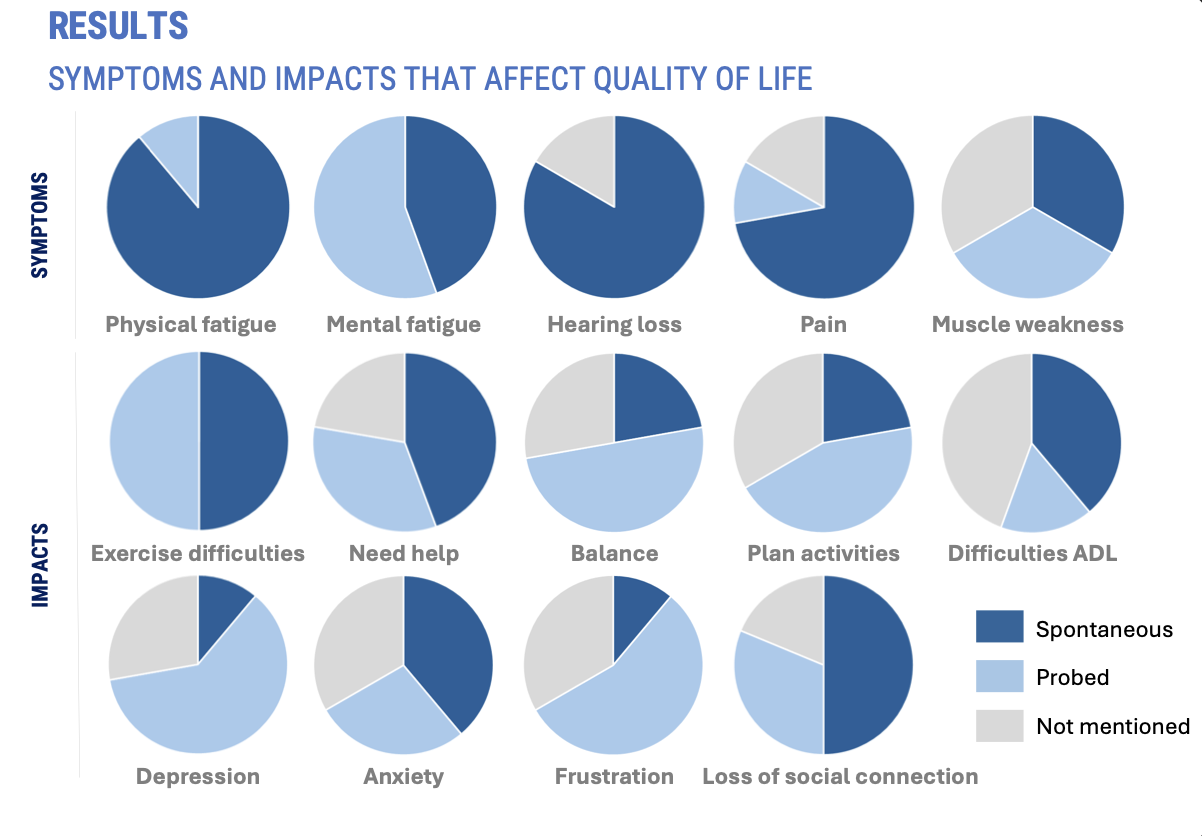
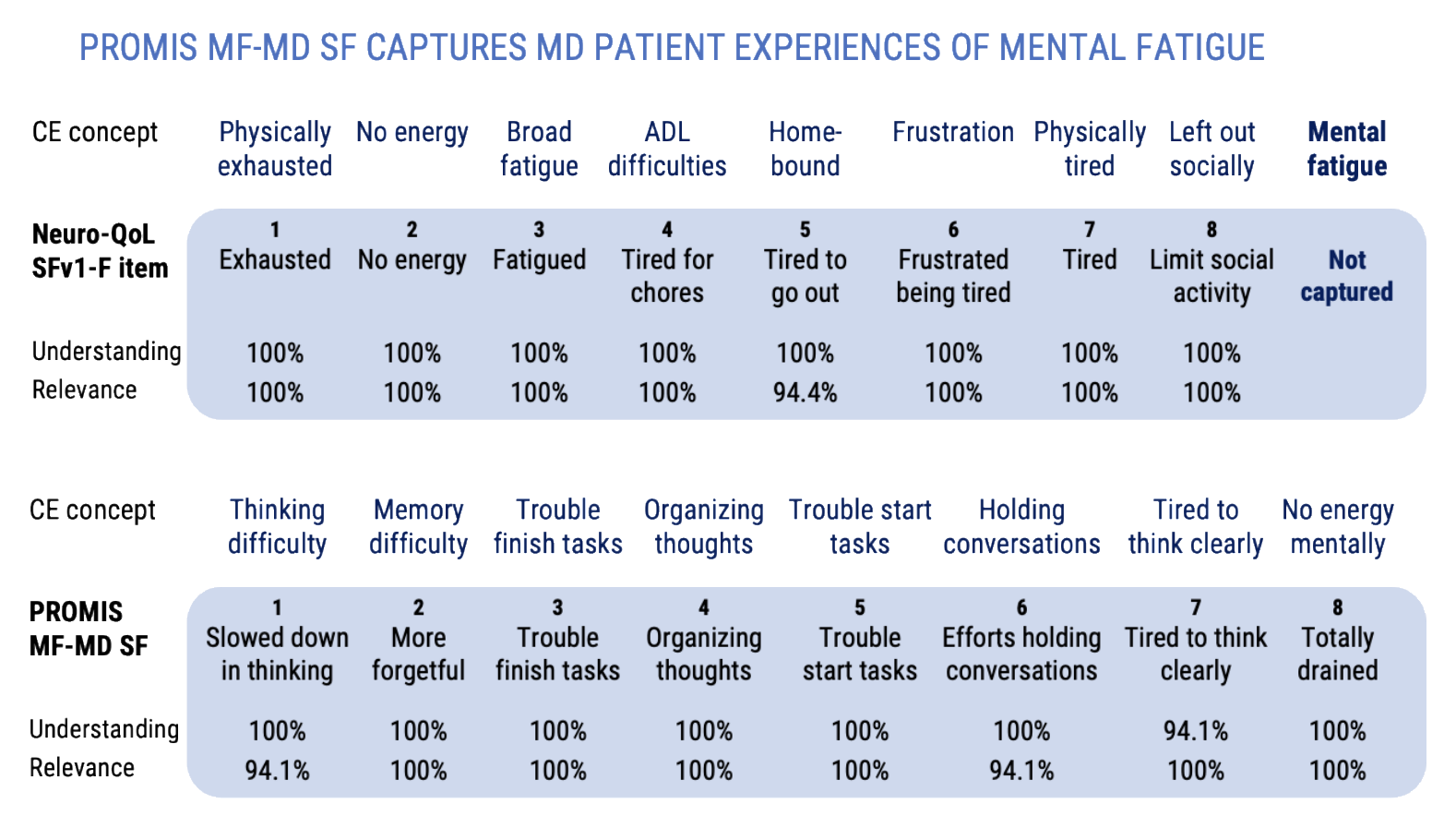
The study informs selected KHENERFIN endpoints and their interpretation by:
Jasper Levink, Chief Executive Officer, Khondrion B.V. - “Patients are at the center of Khondrion. This publication shows how that principle translates into clinical development: we listen to people living with mitochondrial disease, identify the functions and symptoms that matter in daily life, and use that evidence to shape our pivotal programme. The study supports the focus of KHENERFIN on physical fatigue and lower-limb function, while the additional assessment of mental fatigue will help us interpret results in the context of a genuinely multisystem disease.
We want to thank the patients and investigators who made this study possible — their willingness to share their experience is what allows us to build a pivotal programme that truly reflects patients' needs.”
KHENERFIN is a pivotal, randomized, placebo-controlled Phase 3 study evaluating the efficacy and safety of sonlicromanol in adults with genetically confirmed m.3243A>G primary mitochondrial disease. The 52-week study will assess predefined efficacy and safety endpoints relating to patient-reported physical fatigue and lower-limb function, with mental fatigue evaluated as an additional patient-reported dimension. For more information about KHENERFIN, visit ClinicalTrials.gov (NCT06451757).
KHENERFIN’s endpoint strategy was informed by two complementary sources of evidence: patient-reported priorities and findings from Khondrion’s published Phase 2b programme.
The Phase 2b programme was designed to evaluate sonlicromanol across a range of clinically relevant domains and to inform the design of a longer, more definitive study. It comprised a 28-day randomized, placebo-controlled, three-period crossover study in 27 adults with m.3243A>G-associated primary mitochondrial disease, followed by a 52-week open-label extension.
In the randomized study, the prespecified primary endpoint—attention measured by the Cogstate visual identification task—did not demonstrate a statistically significant treatment effect in the primary analysis. However, the programme generated encouraging signals across multiple domains relevant to patients with m.3243A>G primary mitochondrial disease. Post hoc baseline-severity-adjusted analyses showed signals over placebo in selected measures of cognitive functioning and mood, particularly among participants who were more affected at baseline. Analyses of secondary outcomes also generated exploratory findings across cognitive, mood and patient-reported domains.
The 52-week open-label extension provided additional supportive observations. Changes from baseline were reported across several patient-reported, cognitive and physical-function measures, including fatigue, physical health, pain, balance, attention and quality of life. Most patients assessed on the Five Times Sit-to-Stand Test showed improvement. The breadth of these observations across domains is encouraging and aligns with the multisystem burden and patient priorities described in the present qualitative study and in broader patient-voice evidence.
Safety and tolerability observations over the study period were generally favourable, with most adverse events reported as mild or moderate and no clinically relevant QTc prolongation observed at the doses studied. Please note the Phase 2b programme was small and was not designed or powered to characterize the safety profile of sonlicromanol. Similarly, because the extension was open-label, included a small number of participants and had no placebo comparator, its observations are supportive and hypothesis-generating but cannot on their own establish a treatment effect.
Taken together, the Phase 2b programme generated encouraging, multidomain and hypothesis-generating evidence and helped identify clinically relevant patient groups, measures and domains for further prospective evaluation. Its findings informed selected elements of the KHENERFIN endpoint strategy, including the focus on patient-reported physical fatigue, lower-limb function and longer-term assessment in a more clinically affected and more homogeneous population. Together with the patient-derived content-validity evidence described in this release, the Phase 2b findings provided a constructive basis for KHENERFIN.
The m.3243A>G PMD spectrum includes different clinical presentations, including classic MELAS, maternally inherited diabetes and deafness (MIDD), chronic progressive external ophthalmoplegia and mixed phenotypes. Classic MELAS is therefore one presentation within the broader m.3243A>G PMD spectrum and is not synonymous with the full study population.
Ref: Smeitink J, et al. Phase 2b program with sonlicromanol in patients with mitochondrial disease due to m.3243A>G mutation. Brain. 2025;148:896–907. doi:10.1093/brain/awae277.
The study used concept elicitation interviews to explore participants’ lived experience of symptoms and impacts, followed by cognitive debriefing interviews to assess the relevance, comprehensibility, and suitability of the Neuro-QoL Short Form v1–Fatigue and the draft PROMIS Mental Fatigue–Mitochondrial Disease Short Form. The study corroborates and extends the patient priorities identified in UMDF's Voice of the Patient report, translating those broader patient priorities into content-validity evidence specific to the m.3243A>G variant.
The study included adults with genetically confirmed m.3243A>G PMD. Concept elicitation interviews included 18 participants, and cognitive debriefing interviews included 17. Participants were recruited in the United States and the Netherlands.
This was a non-interventional qualitative study. It did not evaluate the efficacy or safety of sonlicromanol or any other treatment. The study provides content-validity evidence and patient-relevance evidence for endpoint selection; it does not establish psychometric validation, responsiveness, a confirmed clinically meaningful change threshold, treatment efficacy, or disease modification. It also does not establish the magnitude or durability of a treatment effect, validate the full pivotal endpoint package, resolve statistical or multiplicity considerations, or remove risks related to recruitment, missing data, trial execution, regulatory review, or reimbursement — those questions can only be addressed by the KHENERFIN randomized, placebo-controlled study and the totality of evidence.
This study reflects a collaboration between Khondrion's clinical and patient-engagement team, clinical experts at Radboud University Medical Center (Nijmegen, the Netherlands) and Massachusetts General Hospital and Harvard Medical School (Boston, USA), and Clinical Outcomes Solutions, a specialist outcomes-research consultancy with offices in the UK and the United States that led the concept elicitation and cognitive debriefing interviews, and contributed expertise in content-validity methodology.
This study was funded by Khondrion B.V. Several authors are Khondrion employees. Clinical Outcomes Solutions employees contributed to the study design, interviews, analysis and/or interpretation, as described in the publication. Full author affiliations, contributions and competing-interest disclosures are available in the published article.
The study was qualitative and included a small sample recruited from two countries. All participants identified as White or Northern/Western European, and the findings may not generalize to people with other genetic causes of primary mitochondrial disease or to all populations with m.3243A>G-associated disease. The draft mental fatigue measure requires further quantitative evaluation, including assessment of its psychometric properties and ability to detect meaningful change. The study did not evaluate or validate the specific lower-limb performance measure used in KHENERFIN.
Khondrion B.V. is a privately held, clinical-stage biotechnology company based in Nijmegen, the Netherlands. Patients are central to the company’s mission. Khondrion is investigating therapies intended to address biological mechanisms that may contribute to mitochondrial disease progression.
Khondrion’s lead programme is sonlicromanol, an oral, brain-penetrant redox and ferroptosis-modulating small molecule in late-stage clinical development for genetically defined primary mitochondrial disease caused by the m.3243A>G mitochondrial DNA variant. Sonlicromanol is being investigated for its potential effects on downstream consequences of mitochondrial dysfunction; it is not approved for commercial use.
Jasper Levink
Khondrion B.V.
info@khondrion.com


